Furry Friends Gear provides reviews of pet products for dog and cat owners. We also publish how to articles, training tips articles and other important information for pet owners. We review all types of dog and cat products so you can have the confidence in buying the best pet products for your furry friends.
Showing posts with label dogteethcleaning. Show all posts
Showing posts with label dogteethcleaning. Show all posts
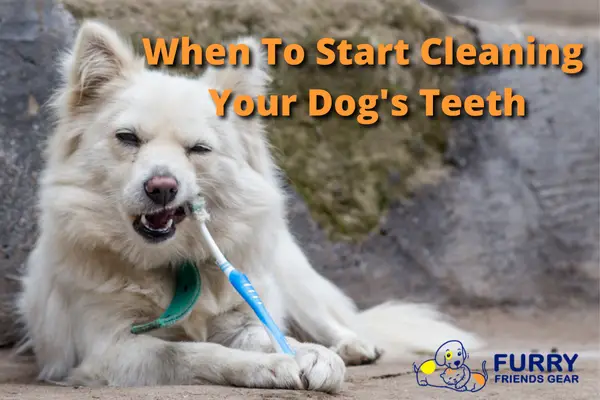
One of the most crucial parts of keeping your dog healthy is oral hygiene. If you keep on ignoring it, there eventually comes a time when dental disease consumes your four-legged buddy and causes its health to deteriorate in no time. The lack of attention to oral hygiene leads to issues such as the buildup of plaque and gum disease. As an owner, you need to know when to start cleaning your dog's teeth!
Many dog owners are unaware that dental disease is the second most common health problem in dogs, trailing behind ear infections. But unlike ear problems, dental issues are usually painful and unbearable. It's just like how humans can endure a headache but can't stand the pain caused by a toothache. Knowing and embracing the responsibility of cleaning your dog's teeth will not only prevent pricey treatment costs but also keeps your dog healthy and well-groomed.
As a pet owner, you'll recognize the immediacy of dental cleanings for your pup, but you can't help but wonder what's the right age to begin. You’ve seen some of your friends who religiously bring their dogs to the dentist or vet for scheduled cleanings, but you’re unsure when you should start. The truth is that there's no standard or strict rule as it depends on each dog.
There's a rule of thumb that says that large breeds don't need to have their teeth cleaned until they're almost adults, while small breeds, i.e., Chihuahuas and Yorkies must be subjected to dental cleanings while they're young. The rationale is that small breeds usually have large teeth in proportion to their mouths, which means there's a greater possibility of crowding and trapping bacteria from food.
Importance of Oral Hygiene
You know by now that oral hygiene is as critical for dogs as it is for us. Although there's always the option of taking your pooch to the vet for scheduled dental cleanings, there's no denying that the first base is brushing. If you don't put in the effort to brush your pet's teeth, it'll promote the accumulation of bacteria and the buildup of plaque - both of which are contributory factors to gum disease and tooth loss. It's best that you start brushing your puppy's teeth early to prevent the possible pain and inconvenience of dental problems later. When to start cleaning your dog's teeth is up to you, but the earlier the better.
There's no exact rule when it comes to the right age, but it isn't necessary when it hasn't lost its puppy teeth. Hence, the best guess is about five to six months of age, at the time when the pet has gained its permanent adult teeth. After that, the sooner you can start the better. It makes sense to start early as it gives time for the young pup to get used to the routine.
Brushing doesn't require fancy tools - all you need is a toothbrush and toothpaste specifically made for dogs. When to start cleaning your dog's teeth means learning about specialized toothpaste for pets that contain ingredients that are palatable and safe for your four-legged buddy. You never should use regular toothpaste for humans as it may contain ingredients harmful (even poisonous) to your dog. One common example is xylitol. Don't worry because toothbrushes and toothpaste designed for dogs are readily available in pet stores and vet clinics.
When To Start Cleaning Your Dog's Teeth: The First Time
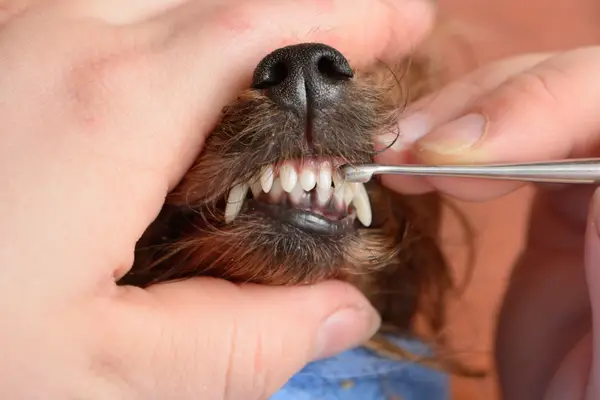
Don't be afraid or hesitant on your first try. The key is to start off as gently as possible. You don't want your pup to have a frightening experience either, as it would make it feel wary of another session. You begin by putting your fingers on the pet's mouth and rubbing them across the teeth. Allow the animal to sniff and check on the toothbrush; if possible, let it taste the toothpaste before putting the same into its mouth. It's best that you give the dog a treat and maybe some belly rub once you're done brushing. This generates a mindset in which it will associate brushing with a pleasant and rewarding experience.
Embracing a Routine
The way to succeed in maintaining good oral health for your dog through brushing is by embracing an effective routine. You want that routine to be convenient to you and your pup so that it won't bother the animal. The last thing you want is for it to think that there's no need for it. In a perfect world, you could brush your dog's teeth daily, but that's highly unlikely if you're busy with other stuff like business or work. You also can't maintain a daily brushing routine if you have more than a couple of pets at home. Well, it doesn't have to be daily brushings - the key is to do it regularly by embracing a routine. A routine will help you when you start cleaning your dog's teeth.
Regular Check-Ups
Aside from brushing, you probably already know that there are other ways to maintain your pup's excellent oral health. One of them is by taking regular dental examinations. Like brushing and dental cleaning, you want to know when the right time is to start taking your pet for those scheduled check-ups. The answer is quite simple: as soon as possible. Once you've started visiting the dog dentist or vet, you'll have to commit to a dental exam twice a year. Teeth cleaning may also be required once a year, depending on the condition of your dog's teeth. Remember that bad breath in dogs is typically indicative of more severe issues like tooth decay and gum disease. Annual dental check-ups are the only way to figure this out.
Teeth Cleaning Toys
While regular brushing and professional dental cleaning are the ways to go to clean your dog's teeth, it doesn't mean that those are the only options. The reality is that regular brushing and frequent visits to a dog dentist can be quite inconvenient for a pet owner. Aside from the fact that brushing takes a ton of time and patience, dogs generally don't like people touching their mouths. Well, the next best thing might just be the most convenient option in the practice of good oral hygiene. It comes in the form of teeth-cleaning toys.
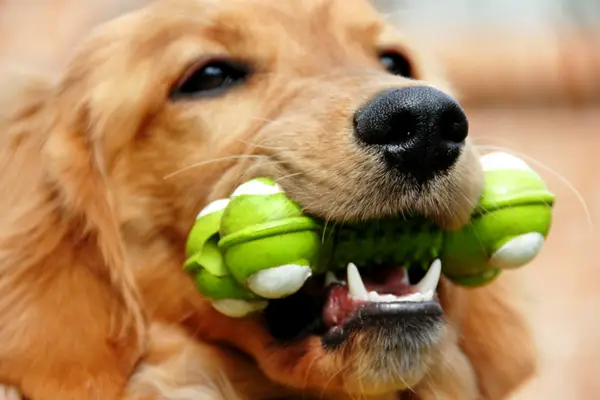
There are hundreds of varieties of specially designed toys that help in cleaning the animal's teeth. These toys are effective because they're made to withstand the pressure of chewing and gnawing. Dog teeth cleaning toys are meant to be enjoyed by your four-legged buddy; in so doing, its mouth produces saliva, thereby washing away and preventing the buildup of plaque.
Dogs have different dietary needs. Some breeds are more prone to health issues than others. When it comes to maintaining healthy teeth, your dog's diet has a crucial role to play. If you're unsure about your pup's specific needs for food and nutrition, it's best to seek help from a local veterinarian. You'll get an expert's advice on the best diet for your dog.
When it comes to food, there's evidence that opting for dry varieties will help in cleaning the teeth. The reason is that the pooch exerts added effort to chew on the dry kibble, which naturally removes debris, bacteria, and plaque building up in between the teeth.
Aside from the usual dry dog food, there also are consumable dental chews and treats that are specifically made to clean the dog's teeth without any intrusion. It means that you just let the dog munch on the treats while cleaning its teeth naturally.
There's an ongoing debate about the safety of feeding dogs with bones. Even when given raw, bones with some meat in them are certainly a tasty treat for the pup, plus its texture helps in cleaning the teeth. But the glaring problem is that bones are hazardous. The hard texture and sharp parts can cause punctures and fractures. When swallowed, bones can result in severe constipation.
Meanwhile, cooked bones are more dangerous to pets because they are more likely to fragment. When this happens, it might cause severe internal or organ damage. If possible, avoid feeding your dog with bones, either cooked or uncooked.
https://www.youtube.com/watch?v=xBnGRtps-Ro
Teeth Cleaning Benefits of Edible Dog Chews
Like teeth cleaning toys, you may give your pup edible dog chews as soon as it develops its permanent teeth. As the name suggests, these are edible products that your pup can munch on until they’re fully consumed.
The difference between edible dog chews and traditional treats is that the former gives the pooch a harder and longer time to consume. Dog chews are made in a way that the pet enjoys gnawing action for an extended period, thereby effectively scraping the teeth, and stimulating the gums at the same time. As a result, any buildup of residue and food particles in between the teeth is prevented.
Edible dog chews come in different forms, shapes, and sizes. You can start giving your dog these treats once you feel like it is capable of gnawing action without injuring itself. Since these products help clean your dog’s teeth, you shouldn’t feel obligated to do daily brushing. The most popular types of dog chews are bully sticks, beef tendons, antler sheds, and dried beef trachea. Keep in mind that these chews offer at least five minutes of chewing, which is more than enough to break up trapped food particles in between teeth.
Non-Edible Variants
What makes non-edible dog chews and toys advantageous is the fact that they’re durable enough to last for months before you can see clear signs of deterioration. Like edible treats, dog chewing toys promote improved oral health as well as clean teeth.
They’re usually made from infused nylon-based materials that are virtually unbreakable. We call them versatile interactive toys because your dog gets a lot of fun out of them. So, if you have a pup with a highly destructive chewing habit, giving it non-edible dog teeth cleaning toy makes perfect sense.
One of the best things about dog teeth cleaning toys is that you can give them even to a young pup. Since it doesn’t have any sharp components and small fragments, the dog will be perfectly safe playing with it. However, be sure that you choose a toy that’s large enough for Fido to swallow and choke on. The only risk associated with these toys is the choking hazard. But if you get the right size, then that shouldn’t be that much of an issue.
Insist on Quality
Once you’ve decided to buy dog teeth cleaning the toy, the most critical thing to factor in is the quality of the product. Although there are literally thousands of toys to choose from, there’s no guarantee that all of them are made from safe and high-quality material. Any dental product meant for dogs to chew and gnaw on must be durable enough for it not to break into smaller fragments. On the other hand, you can’t choose something that’s too hard as it might cause a serious injury like a broken or chipped tooth.
Furthermore, be wary of the possibility of buying a dog tooth cleaning product that contains toxic materials. It’s hard to fathom, but some manufacturers don’t care about the well-being of our pets. They make products with profit as the foremost consideration. Sometimes, these companies use cheap materials which may contain lead, mercury, or any other chemical that could prove fatal when ingested.
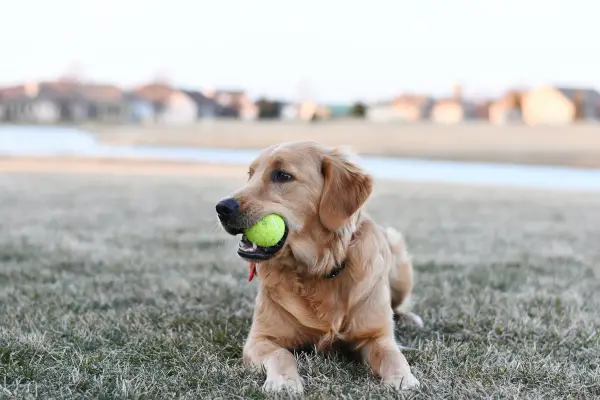
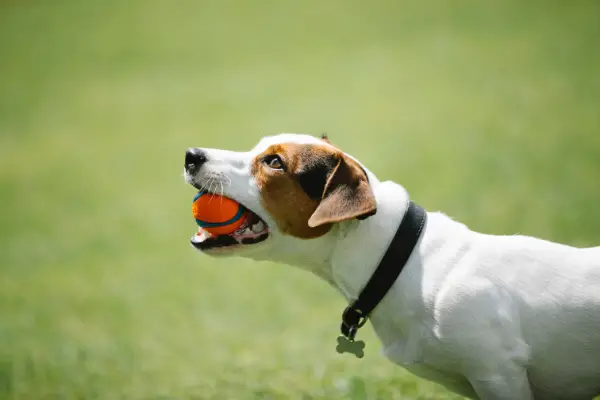
Also, don’t let your dog play or munch on tennis balls. You probably have seen this trend once or twice on TV, but it’s not a sensible choice for dog teeth cleaning purposes. Tennis balls look fun, but the material from which the outer surface is made will wear down the dog’s tooth enamel, causing irreparable damage over time.
Be reminded that your dog’s safety and well-being must always be a priority. Don’t go cheap on your beloved four-legged buddy or you might regret it. So, paired with a healthy diet, regular brushing, and occasional visits to the vet for oral exams, you’ll have the best strategy to keep your dog’s oral health at the optimum level. Chew toys offer the convenience that you’ll never get from other methods; best of all, your dog loves them.
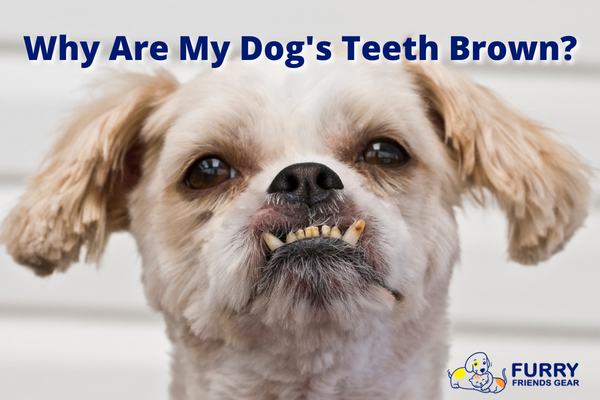
The sight of brown color or tint on one of your dog’s teeth may not be a sign of a severe issue, but it is still something that you must address. Tooth discoloration happens in six out of ten dogs, and there are a handful of possible causes. While there’s always the option of taking your pup to the veterinary dentist for a comprehensive examination, not all owners have the time or commitment to do it. But what is the brown stuff on my dog's teeth?
Even if there’s no need for immediate treatment, it’s your job to consider all the possibilities on why there’s brown stuff on your dog’s teeth. Since it isn’t supposed to be there, it only means that there’s an underlying issue that may affect the animal’s oral and holistic well-being.
It doesn’t take a genius to figure out what might be causing it - all you must do is read this article to learn about the possible causes. We’re confident that you’ll be more convinced to get professional help for your furry buddy after reading this post.
Tooth discoloration is categorized into two: extrinsic and intrinsic.
Extrinsic Discoloration
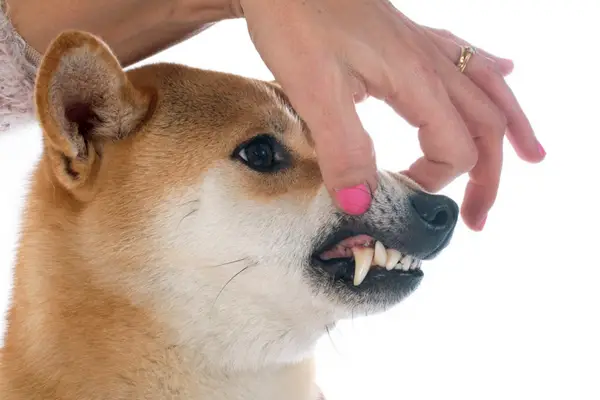
Both brown and yellow teeth characterize extrinsic discoloration. It occurs when stains start building upon the surface of the tooth. The term suggests that the discoloration is caused by an external source instead of an underlying condition or infection. Your dog develops brown and yellow stains in its tooth because of food stains, stains caused by medication, bleeding gums, and the buildup of plaque and tartar. It can also be caused by munching on metal.
Intrinsic Discoloration
Meanwhile, discoloration on your dog’s teeth is described as intrinsic when you see the color black, gray, purple, pink, or blue. As the name suggests, this one happens within the tooth structure and is most likely caused by an underlying health problem. The causes of intrinsic discoloration may be one of the following:
Presence of excess bilirubin in the blood
Systemic infection
Injury to the tooth
Certain health conditions involving the underdevelopment of the enamel or dentin
Furthermore, intrinsic staining is a telltale sign of dead pulp tissue inside the tooth. Keep in mind that dead pulp tissue usually leads to pain and inflammation right down to the bone surrounding the end of the root. The issue with dead teeth in pets is that it’s almost impossible to notice any outward sign of pain since dogs don’t know how to tell you that it is in discomfort. Dental pain is something that dogs are quite good at masking.
What Is The Brown Stuff On My Dog's Teeth? Familiarizing the Signs
Both extrinsic and intrinsic tooth discoloration showcase a familiar set of signs, including but not limited to, the following:
There are times when you’re dealing with something more severe than discoloration. Rotten teeth are common in dogs, and the first sign is a stinky mouth. If you don’t have the time to take your pup to a dog dentist, you at least should be able to pinpoint the signs. Being in the “know” means you can measure the severity of the problem and eventually realize if going to a veterinarian or dog dentist takes immediacy.
The warning signs are:
Tartar or Plaque
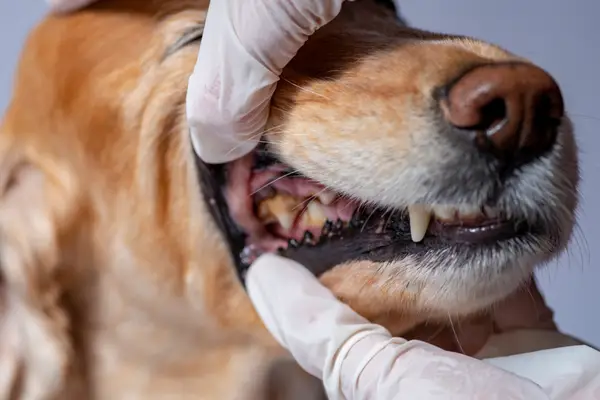
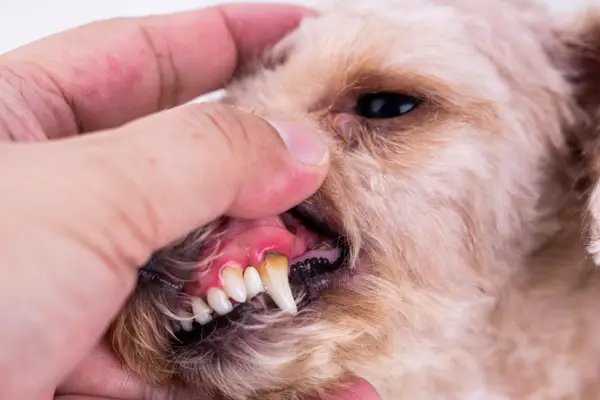
The buildup of hardened dental plaque may appear harmless, but it’ll wreak havoc on your dog’s oral health once it reaches the inside of the teeth and gums. It’s a mineral deposit that usually appears yellow, brown, or orange.
Holes Created by Cavities
Dental cavities (caries) appear as holes in the teeth. They’re easily identified because of their dark appearance on the surface. It can be dark spots or holes. Cavities, if not addressed right away, could lead to severe tooth pain.
Discoloration
Tooth discoloration is quite common as brown or yellow in appearance. You’ll notice it on your dog’s teeth along the gumline. The discoloration is usually the start of the buildup of plaque and tartar.
Gingivitis
Perhaps you’re surprised by it, but dogs also suffer from gingivitis. You know that your dog has it when the gums are swollen. The gums appear swollen and inflamed, eventually wrapping the teeth. In most instances, the inflamed gums are accompanied by the plaque at the base of the teeth.
Periodontitis
Remember when we talked about gingivitis in dogs? If you continue ignoring the condition, it’ll eventually result in periodontitis, which is a severe type of gum disease that causes the gum line to pull away from the teeth. It’ll form pockets and cause bleeding or produce puss.
Bad Breath
Your dog’s stinky breath may no longer be just about the food it ate. It can be a sign of poor dental hygiene and rotten teeth. If the dog’s breath has the same foul odor regardless of the food you give, it means that a more severe condition causes the bad breath.
https://www.youtube.com/watch?v=LFUk8z0x-yQ
It Started with Brown Tooth, and Now It’s Abscess
Don't wait to find the answer to "what is the brown stuff on my dog's teeth?" Just when you thought that the brown color on your dog’s teeth was nothing to worry about, you’re now facing the prospect that it might be a tooth abscess. Your biggest issue right now is that you can’t investigate your dog’s mouth because the animal is uncomfortable with it. Fortunately, there are ways to spot the signs without forcing your pet to open its mouth.
Difficulty in Eating
The first sign that the brown teeth have turned for the worse is when the dog finds it difficult to eat or even chew on its favorite treat or toy. It is indicative of tooth pain when the pet hesitates to pick up food or favors one side of the mouth when eating.
Head Shyness
This behavior is highlighted by your dog’s negative response when you try to touch one side of its face or mouth. There comes a time when it no longer allows you to touch its whole head. The reason for this is pain that’s caused by rotten teeth or the development of an abscess.
Drooling
Another sign of teeth abscess or an advanced stage of rotten teeth is when you notice an unusual drool from your pet.
Bloody Saliva
A dog that spits out bloody saliva is a clear indication that it suffers from a severe dental issue. It could be directly caused by rotten teeth or something else.
Frequent Sneezing
When dogs experience severe periodontitis, they will likely suffer from bone loss between the oral and nasal cavities. This bone loss is the reason why you notice that the animal sneezes all the time. The nasal discharge triggers the sneeze.
Presence of Blood in the Dish or Chew Toys
When bloody saliva is excreted, it usually shows up on the chew toy or the water dish. It’s another clear sign of tooth abscess.
You’re lucky to catch the brown-colored tooth falling out, but that’s highly unlikely. Dog owners don’t usually notice right away that the dog has lost a tooth. There’s a scenario when the dog bleeds from the mouth and transfers it to the water bowl. If you chance upon this situation, take a closer look at the inflamed gums. In cases of severe tooth abscess, parts of the tooth will crack.
A dog’s teeth falling out are attributed to two reasons: first is the tooth’s trauma, second is because of periodontitis. The buildup of plaque and lack of treatment causes the gums to swell, which in turn develops into periodontitis. As it happens, the gums pull away from the teeth, which allows bacteria to creep in. As bacteria eats away at the teeth, it will eventually lead to decay and tooth loss.
What Is The Brown Stuff On My Dog's Teeth and What Does It Mean?
Brown teeth, or any discoloration for that matter, aren’t the only oral health issue that’s common in dogs. You may also notice brown spots, this time on the gums. A would-be dog owner needs to dig deep and research a specific breed’s tooth and gum patterns. What you consider normal for one breed could be a sign of trouble for another. Nevertheless, the sudden appearance of brown spots on the gums tells you that it is time to visit a veterinarian or a dog dentist. It could be because of the lack of proper hygiene or something more serious.
Possible Infection
Gum infections, i.e., gingivitis and periodontitis, are likely causes of the brown spots on your dog’s gums. Unless you are a veterinarian, there’s no way to figure this out on your own. Hence, the only possible determination is performed by a vet. If for some reason, you can’t take your dog to the doctor at the moment, then you can examine it on your own if you want to.
Look for swelling and redness along the gum lines and near the spots. If you see something together with slight bleeding, then it’s likely an infection. You’ll know that the infection is at an advanced stage when your dog favors chewing on one side of the mouth and avoids the other. It is indicative of a painful infection on the gums.
Natural Pigmentation
As mentioned earlier, it is your responsibility to research the dog that you wish to own regarding patterns and natural colors in their gums and teeth. Normal pigmentation varies from one breed to another. While pink gums are the epitome of a healthy pup, some breeds come with brown spots. So, it’ll be challenging to figure out if your four-legged buddy has gum disease or if it’s a natural color. Arm yourself with information before you panic.
What Happens If Gum Infections Aren’t Treated?
If you fail to spot the infection or you’ve suspected it but didn’t bother having your dog checked, then it’ll naturally spread throughout the body. Keep in mind that gum infections are a prelude to more severe health problems that may result in your dog’s death. That alone should help convince you to have that infection treated.
The best way to avoid a gum infection is on a preventive basis. It means that once you suspect there’s gum disease, then take Fido to the vet right away for a quick treatment. As we talked about earlier, you shouldn’t wait for things to spiral out of control, i.e., teeth start to rot and fall out.
Fortunately, gum disease and infection are avoidable by performing convenient preventive measures. Proper oral hygiene begins with brushing to get rid of plaque and prevent the buildup of tartar. But because it’s no cakewalk to brush your dog’s teeth, you may want to explore the alternatives like giving the animal something that it likes, such as dog treats and chew toys. Both products are effective in removing plaque and massaging the gums.
But once you see plaque from your dog’s teeth, that’s when you must do whatever you can to remove it. Well, it doesn’t mean you do the cleaning with your hands. The most crucial thing is your commitment since you’re likely to dedicate a ton of attention, effort, and time. Dogs aren’t naturally keen on cleaning their teeth, so they need you to do it for them.
Start with a healthy and balanced diet. What your four-legged buddy eats is based on age, preference, and oral health considerations. If you see that your pup is prone to developing plaque, then feeding it with dry food helps since its abrasive texture helps in cleaning the teeth.
If brushing is out of the question, the next best thing is a dog chew toy or treat. Find safe and high-quality toys with small bumps in the design. As your dog fondly chews it, the plaque and buildup of tartar are avoided without you sweating it out.
Now that you know the answer to "What is the brown stuff on my dog's teeth?", be sure to clean your pet's teeth! Also, be sure to spread this information to other dog owners in order to save them a problem in the future.
Your dog’s oral health is just as important as yours. When not properly taken care of, bad dental hygiene can lead to plaque and tartar buildup, periodontal disease, infections, and eventually, death.
Brushing a dog’s teeth is the best way to keep your dog’s teeth clean. Daily brushing will help prevent food build-up that can develop into plaque and tartar when left alone. Unfortunately, brushing alone is not enough.
The most reasonable compromise is a dog teeth-cleaning toy. Dog teeth-cleaning toys function the same as dog dental treats, but they are not edible. They are mostly designed to entertain dogs while taking care of their oral health.
Since most dog owners don’t really like to encourage the chewing habit in their dogs, many are asking the question: Do dog teeth cleaning toys even work? Is it worth the money?
The short answer is: YES! Dog teeth cleaning toys work, and they’re definitely with the money. And we’ll be discussing everything you want to know about it here.
We’ll discuss:
Why encourage chewing
How dog teeth cleaning toys work
Choosing the right chew toy for your dog
The best chew toys for dogs
And a whole lot more!
If you’re interested to know more about how dog teeth cleaning toys work, read on…
Photo by Julissa Helmuth on Pexels.com
Why Encourage Chewing
Let’s start this discussion by addressing many dog owners’ primary concern - chewing.
Many dog owners don’t want to encourage chewing behavior in their dogs. This is mainly because it causes a lot of damage to furniture, shoes, and other important things inside your home.
It’s frustrating, we know. However, what many dog owners may not also know is that dog chewing can also be helpful to dogs. You only need to give them the proper outlet or the right thing to chew on.
Chew toys can:
Help relieve stress and anxiety
Help teething puppies
Provide mental stimulate
Prevent destructive chewing
Keep your pups occupied
But most of all, they promote dental health. But how do dog teeth cleaning toys work? That’s what we’ll answer next.
The way dog teeth cleaning toys work isn’t really mind-blowing; it’s actually pretty simple. The act of chewing helps scrape off plaque and tartar build-up on your dog’s teeth, which means the more your dog chews, the more their teeth are cleaned.
How well your dog’s teeth are cleaned will depend on the type of chew toy you get them. As much as possible, you should choose a dog toy with a surface that can really go through each of your dog’s teeth.
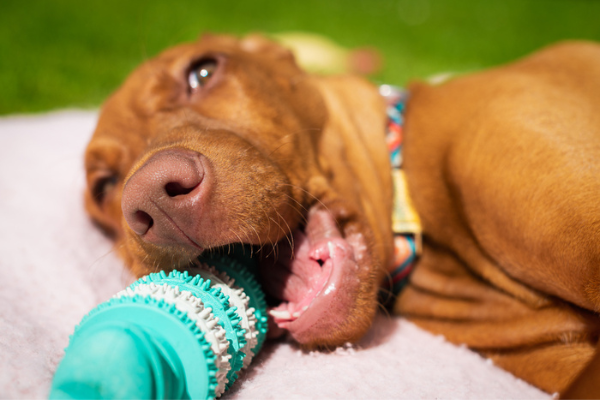
Many chew toys come with lumps or some gaps so that the toy can reach your dog’s gum line. More dirt can be removed, which means lesser dental problems.
Once you decide to buy your pup a teeth-cleaning toy to combine with professional dental care, the first thing you must look for in a product is the seal of approval from the relevant organization or government institution. The seal of approval guarantees that the product was tested in a laboratory to figure out if it has legitimate dental health benefits for a dog.
But does that mean when you find a seal of approval? Well, not exactly. There are still a lot of factors you’d need to consider, and we discuss them all below.
The type of toy you get for your dog matters. And if you need a guide to finding the right kind of chew toy for your fur baby, here are some factors you might want to consider:
Age
The strength of your dog’s teeth or gums can vary significantly with his age. Pups generally have more sensitive teeth and gums than adult dogs, and it’s best to choose a soft chew toy, like a plush toy, as this is more gentle.
Pups are also undergoing the teething stage, giving more importance to soft toys. Once they go past that, you can give them harder ones with more complicated designs to clean out the plaque or tartar build-up.
Size and Weight
Like with age, you’d want to match the toy’s size and weight to your dog.
Choosing a dog teeth cleaning toy that is too small will put your dog in a lot of danger as this can be a choking hazard. But if you choose a toy that is too big, you’ll only be giving your dog a hard time.
The same goes with the weight; too heavy, and your dog won’t have much fun.
Find the perfect balance for these two things to ensure that your dog has fun while also taking advantage of the toy’s teeth-cleaning properties.
Durability
Like with anything you buy, you always want to get the most out of the money. That’s why you would want a dog teeth-cleaning toy that would last long. But does that mean you’d have to find a hard one?
Not exactly.
Durability doesn’t mean hard. The toy could still be made of soft rubber, yet it can endure whatever chewing your pup or dog does.
On top of that, we don’t recommend buying very hard toys for your dog and turning them into chew toys. As tempting as it is, these toys can cause more damage to your dog’s teeth than help.
When testing for durability, you can ask the following questions instead:
What materials are used for the product? Are these materials durable?
Are customers leaving positive testimonials regarding durability?
Does the toy look like it’s cheaply made?
Or does it appear sturdy and strong?
Design
Many dog owners don’t consider this factor, thinking that dogs wouldn’t mind whatever toy is given to them. That is far from the truth.
First impressions matter to dogs. If they don’t feel attracted to the dog toy you bought them, they won’t go near it, and that’s a total waste of money.
Don’t let that happen to you. Always think about what your dog loves and consider that when choosing the style or design of the chew toy. You’re the one who knows your dog best, so you’ll definitely figure this one out.
Chewing Habits
Dogs have different chewing habits. Some dogs are lighter chewers, while there are also dogs that are more aggressive.
When dogs are aggressive chewers, you would want a soft but still durable toy so that it won’t hurt your dog no matter how long he chews on it. The durability also helps ensure that the toy can endure how much chewing your dog does.
Safety
There are two things you need to look at when thinking about safety.
First, materials. What materials are used for the toy? Are they toxic or not? Do in-depth research on the manufacturer and every material they used to make the toy. This helps ensure that your dog won’t be in any danger. After all, they’ll be chewing on this toy a lot.
Second, choking hazards. Carefully examine the toy. Look at the details in the design to check if there are features that can be a choking hazard. If there are any, don’t buy that toy; you’ll only be endangering your dog’s health.
Teeth-Cleaning Ability
The main point of getting a dog teeth-cleaning toy is to clean your dog’s teeth. So make sure to focus on finding one that can really do the job.
A great toy you can choose is one that has thick and sturdy bristles. These bristles are designed to get between your dog’s teeth and remove all food build-up while your dog is chewing on them. Like this one below:
There are many other variations. But the key here is to have a toy with gaps as these are the ones designed specifically for cleaning your dog’s teeth.
You might also want to ask yourself the following questions:
How does the brand advertise the product? Is it really for dog teeth cleaning?
If the brand advertises the product as a dog teeth cleaning toy, figure out how good it really is. Is it designed for only cleaning teeth or for complete dental care?
What are people saying about it?
Photo by Blue Bird on Pexels.com
The Best Chew Toys For Dogs
Considering the guide we have above, here are four types of dog chew toys you can get your dog right now…
Kong-type Toys: Kongs are a classic, and dogs absolutely love them.
These toys are specifically designed with dog chewing in mind. But they are also made for fetching, solo playing, tugging, or even foraging. In other words, they are specifically made to exercise a dog’s brain and keep him happy.
A kong can come in any shape, but the most common one looks like three balls placed on top of each other. The toy has an opening below where you can fill different mixtures of food - dry kibble, peanut butter, and a whole lot more treats that your dog loves.
Freeze the toy, and when it’s ready, you can give it to your dog to play with. The idea is for your pup to play with it while trying to get the food you put inside.
Rubber bones: Ordinary bones can be too hard for your dog and may only damage their teeth more.
But because dogs love bones, the next best thing you can offer them is rubber bones. Rubber bones are usually designed with some little bristles, so it’s almost like their teeth are getting brushed.
Dog treat toy balls: These balls are designed with gaps or spaces that you can fill with dry kibbles or treats. Your dog will then chew on the ball until he can take all the treats. While their teeth go through the gaps or spaces, the bristles scrape off any food build-up.
Those are only three types of toys you can get for your dog. But if you want a more comprehensive list, you can read our article “Best Toys To Clean Your Dog’s Teeth”.
Dog Teeth-Cleaning Toys That Can Damage Your Dog’s Teeth
Now that we know what toys are good for cleaning your dog’s teeth, here’s a list of those that you probably should think twice before giving your dogs:
Bones: Bones have always been associated with dogs. We see it in movies, cartoons, and drawings. However, as much as the two are always together, and it’s undeniable that dogs love them, bones are not the best choice for a chew toy.
Bones can be too hard for dogs to chew on. On top of that, when dogs play with bones, they focus too much on gnawing every last bit of tissue left that they hardly notice a crack in their tooth.
Dogs can’t even complain about broken or damaged teeth. So they’ll just silently suffer from the pain, and by the time you notice, it might already be too late. The tooth may already be infected, which may have already spread inside their body.
Some people may recommend fresh bones, but at best, you must stop giving your dog any type of bone. Aside from just tooth damage, bones can cause other damage, too, like getting trapped at the end of the lower jaw, intestinal blockage, and might even splinter or puncture their stomach.
Tennis Balls: Tennis balls are another common toy for dogs to play with. They are often used in the game of fetch to help a dog stay active.
However, as a dog owner, it’s best to ensure that your dog only fetches the tennis ball and does not chew on it. The fuzzy covering on the tennis balls can rub against your dog’s teeth, breaking down the enamel. When this happens, your dog’s dental sensitivity increases, which can be very painful.
Sticks: Dogs love playing with sticks. They are actually the most accessible and probably the least expensive toy dogs can enjoy.
However, as much as sticks are excellent for a game of fetch, they mustn’t be a toy for chewing. Sticks can cause a lot of problems for your dog. They can wedge between your dog’s teeth, puncture your dog’s mouth, or even damage a tooth.
In other words, you should never let your dog chew on very hard objects. Stick to toys made of rubber and designed to really clean their teeth.
https://www.youtube.com/watch?v=Ohyogw4IOuI
Other Products That Can Help Clean Your Dog’s Teeth
Aside from dog teeth cleaning toys, there are more things that you can supplement teeth brushing with. This way, you won’t only have two weapons to tackle the dental problems of your dogs.
Dental Treats
Dental treats function like dog teeth cleaning toys. The only difference is that they are edible. These treats scrape off any dirt and food build-up on your dog’s teeth as they chew. They also come in many flavors that dogs will surely love, which means dogs will enjoy biting on these snacks.
Dental Wipes
Dental wipes are an excellent substitute for tooth brushing.
If your dog doesn’t like their teeth being brushed every day, then maybe you can alternate between dental wipes and a toothbrush. This way, your dog won’t be stressed out a lot.
With dental wipes, all you need to do is cover the tip of your index finger and carefully wipe each dog tooth. Try to reach the gum line to prevent periodontal disease and other infections.
Dry Kibble
Dry kibble or dry food works well in scraping off the dirt and food stuck in between and on your dog’s teeth. This is why most dog owners prefer to offer their dogs dry food over wet food.
Dental Sprays
Another way you can help your dog maintain their oral health is by using dental sprays. This is perfect for during the days when your dog is too afraid of the toothbrush, or he just won’t come to you at all.
Dental sprays by simply spraying your dog’s teeth and gums, and then you’re done! It gets rid of the risk or possibility of your dog biting you.
Water Additive
If your dog is so afraid of you that you can’t even go near to spray a dental spray, the next best thing would be an oral care water additive. All you need is to add the additive to your dog’s water bowl, and the additive will work wonders every time your dog takes a drink.
Professional Dental Cleanings
Last but certainly not least, you need to bring your dog for professional dental cleanings. Like us, your dog’s teeth need to be checked by a vet at least once a year.
With an annual dental cleaning, a vet can carefully check every part of your dog’s mouth to ensure no damages are hiding behind or between your dog’s teeth. This also helps ensure that your dog’s oral health is excellent.
FAQs
Are dog teeth cleaning toys good for dogs’ teeth?
Yes, dog teeth cleaning toys are good for your dog’s teeth, given that you buy the right type or the dog teeth-friendly one.
According to experts, chew toys effectively reduce oral bacteria in dogs by about 60%-70%. But as much as it is very effective, it can cause a lot of damage to your dog’s teeth if you choose the wrong type of toy.
Remember to find a toy that isn’t too big or too small. It shouldn’t be too hard that the toy damages your dog’s teeth, but it also shouldn’t be too soft that the toy no longer works for teeth cleaning.
Use the guide we have above to find the right toy for your dog.
How can I clean plaque off my dog’s teeth?
The best way to clean the plaque off your dog’s teeth is by brushing or through professional dental cleaning. But since professional dental cleanings can be too expensive to do every month and brushing can become challenging at times, you need to supplement with other ways to clean your dog’s teeth:
Dental treats
Dental wipes
Dog-teeth cleaning toys
Only to name a few.
Do dogs really need their teeth cleaned?
Yes, dogs need to get their teeth cleaned.
Just like us, dogs are susceptible to dental diseases. You must regularly clean their teeth to prevent the accumulation of bacteria, plaque build-up, periodontal disease, and infections that can be fatal once it spreads inside their body.
As you can see, bad breath is not the only thing to worry about when we talk about dental problems. There’s a lot more you have to worry about, but thankfully, a simple teeth cleaning can help prevent that.
Are hard toys bad for dog teeth?
Yes, hard toys are bad for dog teeth? As much as possible, go for toys that are not too hard that your dog loses a tooth or damages one.
Final Thoughts
Dog teeth cleaning toys work. But, you need to find a toy that your dog will surely love but, at the same time, won’t damage his teeth. Here are a few reminders on how to ensure your dog stays safe with his chew toy.
Keep an eye on your dog to ensure that he doesn’t choke.
Buy flexible or bendable toys, so it doesn’t damage your dog’s teeth.
Encourage your dogs to chew on treats or toys for at least 10 minutes a day to help control plaque.
Chew toys that can stimulate your dog’s brain are excellent. The perfect example is the Kong toy, a chew toy where you can put peanut butter and kibbles inside for your dog to find.
Avoid giving bones, tennis balls, antlers, sticks, and any other toy that can be too hard for your dog.
The main goal of buying dog teeth cleaning toys is to help keep your pet’s teeth clean in the most convenient and fun way possible. So make sure that when choosing a toy, you pick one that your dog will love and is designed to really clean his teeth.
There’s more to keeping your dog healthy than food, hygiene, and shelter. Most pet owners think that giving vitamins, food supplements, and grooming are all that it takes to keep your dog healthy. Many people forget that your dog's dental health & oral hygiene is just as important. In this article, we will explore the following dog teeth cleaning tips:
How to clean your dog's teeth with brushes
Using wipes for a thorough dental cleaning
Keeping your dog's teeth clean with wipes
Obtaining healthy teeth with dog dental treats & dog chews
Preventing dental problems with dog chew toys
Professional dental cleanings for dogs' teeth
At the age of three, about 60% of dogs start showing signs of periodontal disease. It begins with bad breath and proceeds to other signs. Indeed, most dogs don’t have fresh breath since they don’t regularly brush anyway, but when the smell becomes noticeably bad, then something is wrong.
Gum disease is as common in dogs just as it is in humans. If ignored and untreated, it can lead to severe health problems and even death. The lack of treatment leads to tooth loss, which corresponds to abscess and infection. You don’t want that to happen because the bacteria in most types of dental disease could travel to the pup’s organs, i.e., heart and kidneys, and will eventually cause death.
Fortunately, gum disease in dogs is something that you can prevent by embracing the responsibility of teeth cleaning.
If you’re interested in practicing good oral hygiene for your four-legged buddy, read on.
Only one out of ten dog owners are successful in brushing their dog’s teeth. Veterinarians recommend it, but doing it regularly is easier said than done.
Dogs don’t like being forced to open their mouth and have their teeth messed with, so it’s hard to blame owners for skipping it. Nonetheless, regular teeth brushing for your dog’s teeth is an effective way of preventing the buildup of plaque which may lead to periodontal disease and other dental problems.
If you’re worried that your pup might not like it, keep in mind that you don’t have to clean your dog's teeth daily. The rule of thumb is to do it as often as possible.
You need two things to brush your dog’s teeth: a dog toothbrush and dog toothpaste.
WARNING: Don't use toothpaste meant for humans as it may contain Xylitol, Fluoride, SLS, and other toxic ingredients to dogs.
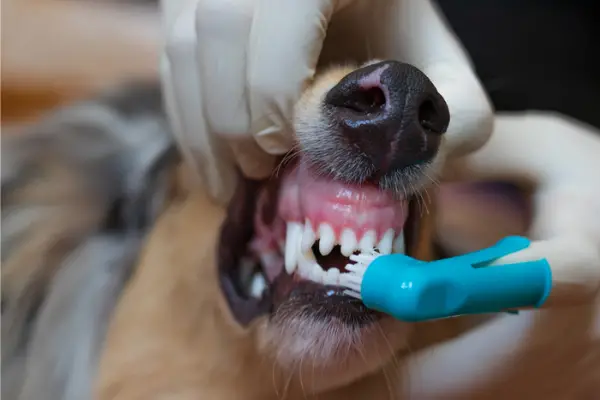
An interesting fact about dog toothpaste is that they’re flavored with tasty ingredients dogs love, i.e., peanut butter or chicken. As for the dog toothbrush, you can go for a finger toothbrush or a traditional one.
By using things that are specifically made for dogs, you’re ensuring your dog’s safety and, of course, effective teeth and mouth cleaning.
2) Wipes To Help Minimize Dental Disease
If brushing your dog’s teeth is a seemingly impossible task, an excellent alternative is using dental wipes to improve your dog's dental health without the trauma of a brush.
Dog dental wipes are helpful and convenient in wiping away food debris and residues right after a meal.
Simply rub the wipes against your dog's teeth to prevent dental problems such as plaque buildup, bad breath, tooth decay, etc. It may not be able to get into tiny nooks and crannies of the teeth as the brush, but it’s handy when your goal is to clean your dog’s teeth every day.
For example, you can brush your dog’s teeth once a week and then use dental wipes on the other days. This way, your dog’s teeth are regularly cleaned, and food buildup will not be just as much as when you don’t brush them.
You can also use the wipes with a small amount of dog-specific toothpaste, so they become more interested in it.
The key is consistency! Regular teeth cleaning will seriously minimize your dog's risk of periodontal disease and other dental problems.
And, as you do this more often, your dog will not fight you.
3) Dog Dental Treats
The best thing about dog dental treats for keeping your dog’s teeth clean is that your dog will love them!
These dog treats are called a dental “treat” because while it removes plaque and food debris, they are also delicious and edible.
In other words, you won’t have to do anything to convince your pup to eat a tasty treat. With different flavors, sizes, shapes, and colors, these dog treats are a fun and highly effective way of keeping the dog's mouth clean and your dog's breath refreshing.
Photo by Blue Bird on Pexels.com
4) Dog Chews For Healthy Teeth
Dog chews are like dog dental treats.
The only difference is that they offer a challenge and take your dog a while to consume. While dental treats are primarily made to keep the product as delicious as possible, dog chews focus on maximizing teeth' cleaning properties.
Dog chews are made from an extensive array of materials, from cow ears and chicken strips to bully sticks and rawhide. This helps encourage gnawing, which corresponds to effectively scraping off plaque from your dog's teeth. Since these products come with enzymes that promote dental health, you’re guaranteed that the constant chewing habit that your dog develops with it will make sense.
Many dog owners prefer chews instead of dental treats because dog chews have fewer calories. Some varieties don’t even have any nutritional value in them other than the enzymes that help eliminate plaque.
5) Dog Chew Toys For Clean Your Dog's Teeth
Dogs love playtime more than teeth brushing. The following dog teeth cleaning tip will be a great way to keep your dog’s mouth clean.
As a matter of fact, they don’t even care about dental hygiene. As the owner, it’s up to you to protect them from possible dental problems. And most of the time, you can only resort to using one of the things they love - playing.
Dog chew toys are made precisely to help keep dogs’ teeth healthy and clean while they are having fun.
Now, not every chew toy is made specifically for oral hygiene. So it’s best to go for the toys made exactly for that. This way, you’re not only buying a toy to keep your dog occupied, but you’re also keeping them healthy.
Check out our article featuring some of theBest Dog Teeth Cleaning Toys to find some great toys that will help keep your dog's teeth clean.
Do Dog Teeth Cleaning Toys Work?
For a simple answer: Yes, dog teeth cleaning toys work.
Chewing is often not accepted in the household, especially if your dog loves chewing on your shoes and furniture. However, if you give your dog the right thing to chew on, like dog teeth cleaning toys, the benefits are enormous.
Chew toys promote dental health in several ways:
Chewing a dog toy or treat naturally breaks up the plaque on your dog's teeth.
Chewing helps smoothen the dog’s teeth and scrape away tartar.
It helps promote antibacterial saliva, which helps clean the dog’s mouth.
It can improve your dog’s breath.
For these reasons, it’s easy to see that dog teeth cleaning toys work in fighting dental and periodontal diseases. However, you should also know that chew toys should never be a replacement for dog toothbrushes.
You can use these toys as supplements for brushing. After all, if your dog loves to play, you might as well take advantage of playtime as also a time for them to clean their teeth. But it’s still crucial that you, a dog owner, brush your dog’s teeth, even if it’s just once a week.
Photo by Blue Bird on Pexels.com
Choosing The Right Chew Toy For Your Dog
Chew toys are one of the best toys to give to your dog - they’re entertaining, fun, and offer many benefits, especially when it comes to maintaining or improving their dental health.
It’s essential that you order the right kind that will not put your dog under any harm.
If you search online for “chew toy”, you’ll get many results. There are so many different kinds such as:
Rubber chew toys
Rope toys
Plush chew toys
Here are some dog teeth cleaning tips that will help you find a suitable chew toy for your dog:
The size: When choosing a toy, make sure you consider your dog’s size or the size of your dog’s mouth in particular. If your dog chews a toy that’s too small, it becomes a choking hazard.
Materials: Next, you’d want to look at the materials used to make the toy. The last thing you want is to endanger your dog because you’ve bought a toy made of toxic or harmful materials.
Durability: Dogs can be destructive, and the last thing you’d want is to waste your money on something that wouldn’t last forever. Make sure that you check the toy and see if it’s durable enough and can survive your dog’s activity.
Level of hardness: While you’re looking for a durable toy, you wouldn’t want it to be too hard for your dog. On the other hand, dog toys that are too soft are also not good. If the toy is too soft, it might not already serve its purpose, and your dog might just tear it fast.
Ease of washing: As the name implies, chew toys are toys your dog chews on, and you definitely want to keep that clean. So make sure that you buy a toy that’s easy to wash.
Another thing we would consider is how the toy looks or the features it has.
Dogs can be easily attached to things, and first impressions are important. That’s why it’s vital that you buy a toy your dog would actually like. One that has extra features is great as it adds a little bit more fun for your dog.
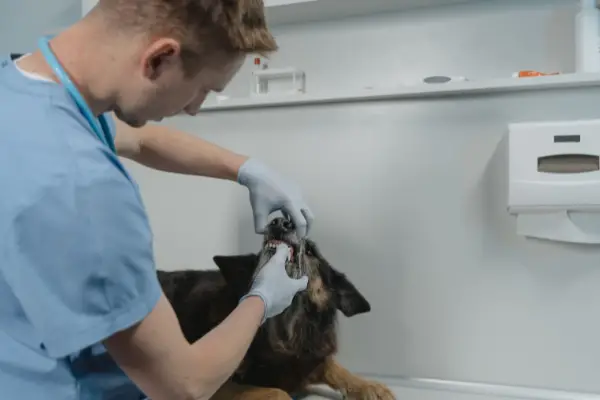
Finally, you can take your dog to a vet for a professional dog dental cleaning.
There's no denying that keeping your dog's teeth clean at home involves a lot of brushing. However, if you're already having a hard time with it, then it's not bath to finally seek help from an expert.
Veterinarians are qualified and trained to clean dogs' teeth using various methods that you certainly can trust.
The professional dog dental cleaning solution depends on the dog’s specific needs, health issues, and attitude. Some methods are more expensive than others, but it’s always best to get your dog treated by an expert.
Photo by Tima Miroshnichenko on Pexels.com
Annual Dental Cleaning
Your dog’s dental health is as important as yours. That’s why it’s highly recommended that your dog gets its teeth cleaned at least once a year. However, this could also vary depending on your dog’s breed, age, and lifestyle.
Age: Vets would highly recommend taking your adult dogs to the dentist at least once a year and your younger pups for more frequent cleanings. Younger dogs have shallow roots, which are more susceptible to dental problems, and it’s wise to invest in more dental checkups.
Size: Like with age, small dogs or breeds would require more frequent dental visits than larger breeds. The main reason is that the teeth of smaller dogs are larger relative to their mouths, which causes overcrowding, especially if they hang on to their baby teeth. A dental check-up would allow for regular monitoring of the inside of your dog’s mouth, which can help prevent plaque and tartar buildup caused by overcrowding.
Breed: The next thing we have to consider is the dog breed. Dog breeds like Pugs, Bulldogs and Shih Tzus all have short faces and noses, making them more at risk for dental problems. The shape of their mouths makes their teeth easily deformed, allowing more places for tartar to hide. Another breed-related dental disease found in dogs is called malocclusion, a deformation where the dogs’ jaws are misaligned. Because of this, tartar can quickly build up, leading to more teeth damage.
Lifestyle: Last but not least is your dog’s lifestyle at home. If your dog has a good dental routine, professional cleanings may not be as needed as frequently.
Usually, the vet will have to thoroughly check your dog’s mouth to find any signs of dental problems before the actual teeth cleaning. This includes:
Loose or broken teeth
Extra teeth or baby teeth that have been retained
Discolored teeth
Bad breath
Swelling, pain, or bleeding
Plaque
In other words, they’ll check the severity of your dog’s dental disease, clean their teeth, and provide advice on what you can do to maintain your dog’s teeth and when you can bring them back for another cleaning.
Remember, having regular dental cleanings is not enough. It’s always essential to keep your dog’s teeth healthy at home.
https://www.youtube.com/watch?v=54WroRd1GiA
An Unusual Professional Dental Cleaning Option
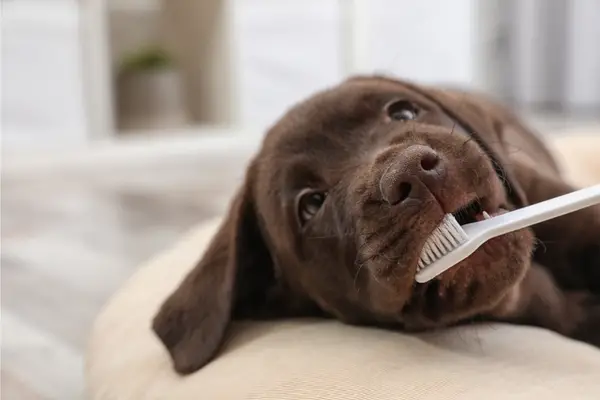
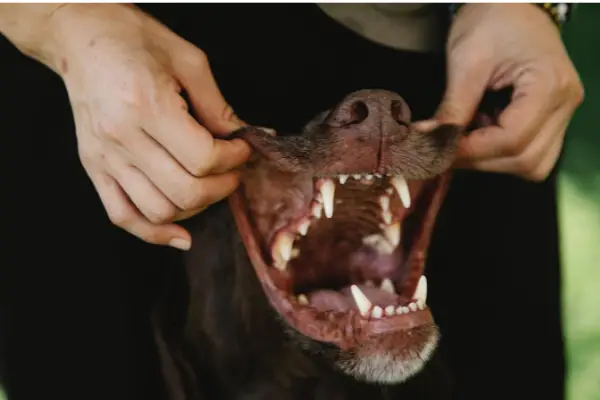
One option is to consider having a professional dental cleaning performed while your dog is undergoing surgery for another issue. Unfortunately, Bailey (my Chocolate Lab) had to get a growth removed. While she was under anesthesia, our vet was able to complete an extensive professional dental cleaning.
While this is a rare situation for us, it was nice to get a very comprehensive professional dental cleaning performed!
One thing to note here...
As a personal testimony that the above dog teeth cleaning tips work, I only had a professional dental cleaning done twice for Bailey’s teeth. And I attribute this to being diligent in utilizing other dog dental cleaning methods as outlined in this article.
What to Expect in Professional Teeth Cleaning?
If you haven’t taken your dog to get their teeth professionally cleaned before, here are some things you can expect.
The first thing you should know is that your dog will have to be put under general anesthesia. There are three reasons for this:
To minimize your dog's stress once the cleaning starts.
A breathing tube needs to be placed down your dog's trachea to help him breathe during the cleaning process.
Some dogs may have more plaque and tartar buildup, requiring more specialized tools.
To ensure your dog's safety, the vet would need to run some blood tests to know if your dog is healthy enough to handle the anesthesia. Aside from that, dental x-rays must also be done to help evaluate your dog's overall dental health. The x-rays allow them to have a closer look at every tooth and perform a tooth-by-tooth exam.
During the procedure, the vet will check your dog's oral health. They will check for cavities, the existence of non-vital dog teeth, gum disease, and probably other deformities. While you might have only gone to the vet for a routine dental cleaning, the vet might need to do extra steps like extracting a tooth if required.
The vet will also continuously monitor your dog's vital signs throughout the procedure to ensure that they are safe.
What happens after the dental cleaning?
Generally, a second x-ray is taken to ensure that your dog's mouth is healthy and no problems would arise by the time your dog wakes up.
You should also know that your dog will have to stay in the clinic until it recovers from anesthesia. And in cases where teeth extractions were done, your dog might even need to take painkillers to minimize their pain and discomfort.
Aftercare is critical in every professional dental cleaning procedure. So remember to follow your veterinarians' recommendations, particularly the diet to give your dog while his mouth still heals, the kind of activities your dog can do in the meantime, and how long your dog needs to heal.
When Can You Take Your Dog for a Professional Dental Cleaning?
If you want the help of a vet to keep your dog's teeth clean, there's one thing you should know: Your dog should be fully grown and healthy enough to handle the anesthesia.
For most dogs, that age would most likely be when they're already two years old. But then again, it's a case-to-case basis. So, while you can’t take your dog for a professional dental cleaning yet, you need to make sure they're receiving proper dental care at home.
At-Home Cleaning Tips To Keep Your Dog's Teeth Clean
It's easier said than done to clean your dog's teeth. We can give you several means on how to do that, such as the things we enumerated above, but the truth is, cleaning your dog's teeth can be difficult.
That's why we compiled several dog tooth cleaning tips that will help make this daunting task easier.
Start When Your Dog Is Young
Dogs are like kids. Anything new to them can be scary, including teeth brushing. That's why it's very helpful if you can begin brushing your dog's teeth while they're still pups.
That's the only way you can develop an effective dental care routine that they'll get used to until they turn into adult dogs.
Developing a Regular Dental Cleaning Routine
Starting your dog early won't magically make them get used to teeth brushing if you're not consistent.
While the goal is to be able to brush your dog’s teeth once a day, you can start by brushing your dog's teeth at least 2-3 times a week. Your dog will probably spend the first week trying to fight you, but keep going.
Find a way to get your dog to trust you, probably by starting to introduce the tools you're going to use slowly.
The next tips we're going to give you will be very helpful in making this happen...
Photo by Ivan Babydov on Pexels.com
Step 1) Find The Right Time
You can't just go at your dog carrying a dog toothpaste and toothbrush and then expect them to be okay with that. There's a big chance they will go run away.
So, find the right time.
It's best to approach dogs when they're calm and relaxed. You can start with once a week, building up to 2-3 times a week, until it gets to a point you can already brush your dog's teeth once a day.
Step 2) Use The Right Tools
Brushing your dog's teeth requires proper tools - a toothbrush and a toothpaste - but the ones made for dogs.
Unlike our toothbrushes, dog toothbrushes have softer bristles and are specially angled. This ensures your dog's safety, and it's also easier to remove food buildup on your dog's mouth as it specifically reaches areas in the gum line that ordinary brushes can't reach.
The same with toothbrushes, you should use dog-specific toothpaste, too. As we already mentioned above, human toothpaste contains ingredients toxic to dogs. Dog toothpaste, on the other hand, is guaranteed safe and even comes in a flavor that dogs will love.
Step 3) Position Yourself Right
Think about your dog's feelings.
Your dog is scared, and the last thing they need is you standing over him. Instead of doing this while standing, make sure to kneel or sit in front or side by side with your dog, allowing yourself to be at their eye level. You want to make your dog feel equal to you so he will trust you.
Step 4) Touch Your Dog's Gums
Set your dog's expectations by making them recognize how it feels when their teeth are being brushed.
Once your dog is comfortable with you, test their willingness by opening their mouth and touching their gum line. Run your fingers along their gums and teeth, so your dog knows how it feels to have something against their teeth.
Do this every time before you start brushing until your dog is no longer scared.
Step 5) Start With A Few Teeth At A Time
You don't have to brush all of your dog's teeth in one go. Since we're starting them young, it's best to start with a few teeth in a day and increase the number day by day. Brush your dog's teeth at least for 2 minutes max at first or until your dog starts to resist.
First, go for the outsides and the back of your dog's teeth. This way, it's possible to finish cleaning all of your dog's teeth before they start complaining. Once your dog becomes more comfortable, you can soon clean in between dog teeth.
Photo by Matthias Zomer on Pexels.com
Use Delicious Toothpaste
Make your dog love getting their teeth cleaned by using a dog toothpaste they will love.
Dog-specific toothpaste usually comes in many flavors like peanut butter, beef, and chicken. And since you're the dog owner, surely, you would know what flavor your dog will love, right? If you don't have an idea, you can experiment with flavors, possibly mixing some of them to create a taste your dog wouldn't be able to resist.
Before brushing your dog's teeth, you can let them taste the toothpaste first to see if it's their liking. Simply put some dog toothpaste on the tip of your finger and allow your dog to lick it.
Try The Toothbrush
Like dog toothpaste, you want to make sure that your dog is comfortable with the brush bristles.
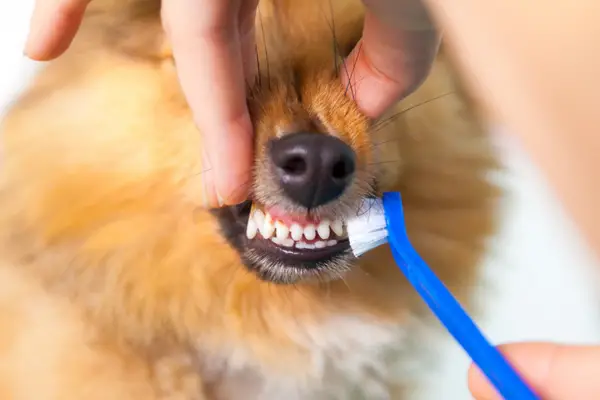
Start by lifting your dog's upper lip and brushing a small portion at first. Start slow, making sure that your dog is comfortable before you go all out. Angle the brush at 45 degrees to reach your dog's gum line while cleaning up the plaque buildup.
Feed a Dental Diet
What's your dog's food? If you're frequently feeding your dog soft food, then maybe it's time to switch to dental care dry foods as your dog's everyday meals.
Wet or soft food is more likely to stick to a dog's teeth, contributing to food buildup, plaque, and soon decay. Dry food, on the other hand, is specifically shaped and textured to help scrub your dog's teeth, which prevents plaque.
Supplement with Dental Treats, Dental Chews, and Chew Toys
If you can't brush your dog's teeth daily, or if you're still having a hard time building that routine, it's wise to supplement with dental treats, dental chews, and toys.
What's good about supplementing is that even if you don’t brush or clean your dog's teeth daily, food buildup wouldn't be as nasty as when you won't supplement. The best part, they help prevent periodontal disease and other dental problems in a delicious and fun way.
On top of that, your dog won't even know you're targeting the plaque in their mouth.
However, be reminded that these should only be supplements and must never replace teeth brushing.
https://www.youtube.com/watch?v=aU3n7kaPxKI
Alternate Between a Brush and A Gauge
If you don't want your dog to be too scared of a toothbrush, you can always alternate between using a brush and a gauge.
Simply wrap your finger with a gauge, place dog toothpaste at the tip, and rub your dog's teeth clean. Simply make small, circular motions, and don't hesitate to lift your dog's lip to reach the tooth area that touches your dog's cheek. Tartar is mainly concentrated in these hidden areas, so make sure you reach there.
By alternating a toothbrush and a gauge, you help your dog get a bit of rest from the toothbrush.
If you don't have a gauge, you can use dental wipes to clean your dog's teeth and minimize food buildup.
Praise Your Dog For Doing A Good Job
Most dogs love to be praised, and if your dog behaves well while you clean their teeth, you'd want to commend them after brushing their teeth clean.
Praise your dog for being well-behaved as this will help encourage them to participate in regular teeth brushing. Oh! Don't forget the dog treats to keep your dogs happy while maintaining excellent oral hygiene.
Dog's Dental Health FAQs
How can I get plaque off my dog's teeth?
Plaque is a sticky film of bacteria formed as a result of food and saliva buildup in your dog's mouth. If not treated, it can lead to serious dental problems like painful gum disease, infections, and tooth loss.
There are four foolproof ways to remove plaque from your dog's teeth:
Brushing: Brush your dog's teeth using a dog toothbrush and dog-specific toothpaste to ensure their safety and comfort.
Chewing: While chewing is a dog behavior that is considered to be negative, it's helpful for dogs as long as they chew the right things. We're talking about dental treats and chew toys that are fun and helpful in cleaning dog teeth.
Switching from wet food to dry food: Soft foods stick to the teeth faster than dry food, contributing to the buildup.
Professional Dental Cleanings: While the three above help a lot in removing plaque, the most surefire way to remove all of them is by getting your dog's teeth cleaned by a dentist at least once a year.
How can I remove tartar from my dog's teeth naturally?
When plaque isn't removed from your dog's teeth, it can harden and turn into tartar, making it more difficult to remove.
Of course, removing tartar may require the same things mentioned above:
Brushing
Chewing dental treats, dog chews, and chew toys
Dental Cleaning
Switching from wet to dry food
However, some natural cleansers might help you:
The first thing you can try is coconut oil. It contains acids that can help kill fungus and bacteria in your dog's mouth. Dogs can consume it safely, and they seem to really like the flavor. You can alternate it with dog toothpaste at any time or use it as a supplement to help clean your dog's teeth.
Aside from coconut oil, you can also try other herbal extracts and essential oils. There are dental sprays and gels available in the market that usually contain natural extracts such as:
Grape seed extract
Thyme oil
Peppermint oil
Grapefruit seed extract
When formulated properly (and safely), these ingredients are very effective in dissolving tartar. They are also great for when you want to prevent tartar and probably heal your dog's gums.
Another thing you can use to remove tartar from your dog’s teeth naturally is raw bones.
Raw bones are very effective and function like dog treats. However, it must be given moderately to dogs because the hardness of these bones can cause significant damage to your dog’s teeth.
WARNING: Never use baking soda to clean your dog's teeth.
Baking soda is very abrasive, making it effective in removing the tartar. A lot of people recommend it, but vets will tell you otherwise. Baking soda has a very high alkaline content, disrupting your dog's acid balance once ingested. And while it may not be fatal, it's uncomfortable.
At the same time, dogs dislike the taste of baking soda, which will cause them to complain and move around during tooth brushing.
Let's stick to the safer alternatives instead of going for this route.
Can you scrape plaque off the dog's teeth?
No, you can't scrape plaque off your dog's teeth on your own. If not done right, you can damage the dog teeth enamel, which can lead to more complications such as:
Being more susceptible to tooth decay
Gum bleeding
Pain and sensitivity
If you want the plaque to be scraped off your dog's teeth, go to a reputable and qualified vet. You should also know that in professional dental cleanings, vets do this procedure when needed.
How can I deep clean my dog's teeth at home?
Deep cleaning a dog's teeth at home is a challenge. Ideally, you need to brush your dog's teeth every day. However, because it's very challenging, dog teeth brushing is better done a few times a week than none at all.
Here are some tips that might help you clean your dog's teeth at home without any problems:
Begin brushing your dog's teeth only when he's calm and relaxed.
Introduce the tools first. Let your dog taste the toothpaste to know if it's the flavor he likes, and let him test the toothbrush.
Place your finger on your dog's teeth and start rubbing it in a circular motion. This is a great way to prepare him for the actual tooth brushing.
You can start using your finger to brush your dog's teeth. All you need to do is wrap it in a gauge, put a toothpaste, and brush as if you're using a real toothbrush.
Start slowly, and don't force your dog when he's uncomfortable. Begin brushing the dog teeth surface and moving up to the gums. Make sure that you don't miss the teeth behind your dog's cheek, as build-up usually gathers there.
Supplement with dental treats and teeth cleaning toys to help remove plaque that brushing couldn’t get rid of.
Do these consistently until you can get your dog to enjoy getting his teeth brushed.
Final Words For Your Dog's Dental Health
It's not only us who need to maintain good dental hygiene; your dogs need it, too.
Bad breath
Plaque and tartar
Tooth decay
Bleeding gums
Painful infections
These are only a few of the many dental problems dogs can get if you don't pay attention to their teeth. And these are only the start. If not prevented, the infection can spread to your dog's body, leading to even more serious problems like kidney disease and even death.
Brushing your dog's teeth is undeniably challenging. That's why it's no surprise that most pet owners tend to skip it. But you have to remember that when you do, your dog is the one who suffers from it.
Use the guide we have above to help you build an effective cleaning routine for your fur baby.